
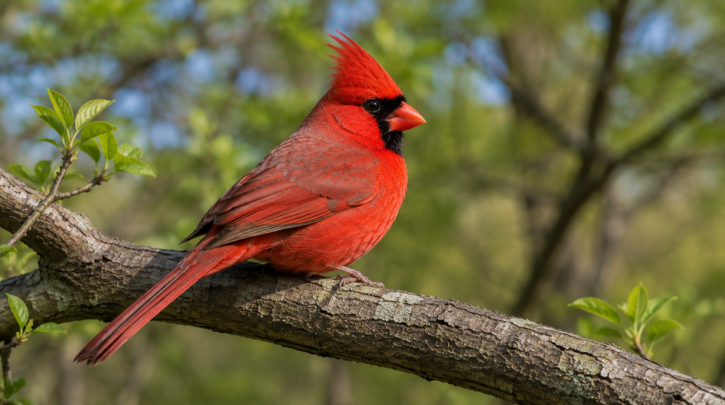

Most wild Northern Cardinals live around 3 years, but that average hides a wide range — banding records have documented individual cardinals living well over a decade, with the oldest confirmed case reaching nearly 16 years. As with most backyard birds, the biggest risk by far is surviving the first year.
Average Lifespan
Population-wide banding data puts average adult cardinal lifespan at roughly 3 years, a number pulled down heavily by high first-year mortality rather than reflecting how long a cardinal that clears its first year typically survives afterward. A cardinal that makes it through its first winter has meaningfully better odds of reaching several more years than the raw average alone suggests.
The Oldest Cardinals on Record
Bird-banding data — individually numbered leg bands tracked over a bird’s lifetime through recaptures and reported sightings — has documented at least one wild cardinal living to nearly 16 years old, and multiple banded individuals reaching 10 years or more. These are clear outliers rather than the norm, but they show cardinals are capable of considerably more longevity than the population average implies.
Why the First Year Is the Riskiest
Unlike migratory species where a long-distance flight is the single biggest hazard, young cardinals face a more spread-out set of risks in their first year: inexperience avoiding predators, competition for food and territory with established adults, and — since cardinals don’t migrate to escape winter — surviving their first cold season without the fat reserves or foraging skill of an older bird; see our winter guide for how backyard feeding specifically helps at that stage.
What Threatens Adult Cardinals
Predation from hawks and outdoor cats, window strikes, and nest predation during breeding season are the most consistent threats to adult and nesting cardinals; see our predators guide for the full list. Because cardinals stay in the same general area year-round rather than migrating, an established adult often has detailed knowledge of predator activity and safe cover in its home territory that a first-year bird simply hasn’t had time to build yet.
Does Winter Feeding Improve Survival
There’s reasonable evidence that reliable winter feeding improves overwinter survival odds for cardinals specifically, since they’re present through conditions that a migratory bird would simply avoid by leaving. A consistent feeder doesn’t guarantee a longer life for any individual bird, but it removes one major variable — food scarcity during the coldest, shortest-day stretch of the year — from an already difficult season.
How Banding Data Gets Collected
Licensed bird banders fit a small, individually numbered aluminum band around a bird’s leg, light enough not to interfere with normal behavior, then log recaptures or reported sightings over the years that follow. This is the primary source for everything known about individual cardinal longevity, and anyone who finds a banded cardinal, alive or dead, can report the band number to the USGS Bird Banding Laboratory to contribute to that ongoing record.
Comparing Cardinal Lifespan to Other Backyard Birds
A 3-year average lifespan is broadly in line with other mid-sized backyard songbirds, though the outlier longevity records — individuals living a decade or more — put cardinals toward the longer-lived end of that comparison group. Larger birds generally live longer than smaller ones as a rough rule across bird species, and cardinals sit comfortably in that mid-size range where multi-year lifespans are the norm rather than the exception for birds that survive early setbacks.
Signs of an Older, Established Cardinal
There’s no reliable visual way to age an adult cardinal precisely once it’s past its first year, but behavior sometimes offers a hint — an older, established bird tends to hold a consistent territory, show confident, efficient feeder visits, and display less of the cautious, exploratory behavior typical of a younger bird still learning its home range.
Lifespan and Population Health
Individual longevity records are interesting, but they’re less important to overall cardinal population health than steady reproductive success across many birds each year, since a species with a 3-year average lifespan and a high first-year mortality rate stays stable through consistent nesting output rather than through any individual bird living unusually long. Cardinal populations across most of their range are currently considered stable to increasing, which reflects that broader reproductive pattern working as expected rather than any change in individual longevity.
For an individual bird owner or backyard birder, though, the outlier records are still the more compelling story — proof that the cardinal at your feeder could plausibly be around for a decade or more to come.