
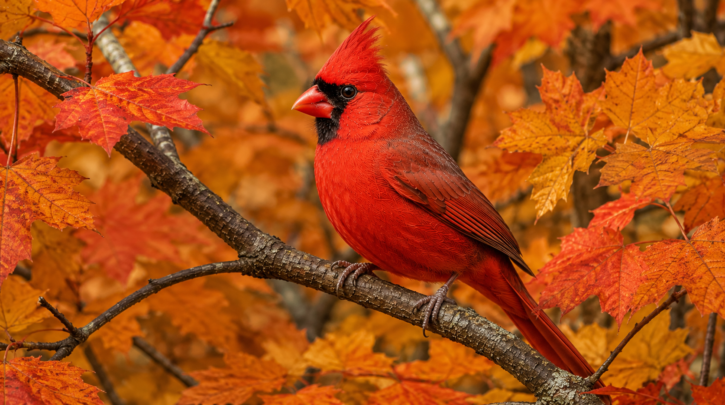

For cardinals, fall isn’t about departure — since they don’t migrate, it’s a transition into the winter they’ll spend right where they are. Fall is when the molt wraps up, territorial behavior relaxes, birds begin gathering in looser groups, and the smart backyard birder gets the yard ready to support cardinals through the hardest season.
Finishing the Molt
Cardinals complete their annual molt in fall, emerging in fresh plumage that will carry them through winter. Freshly molted males may look slightly less brilliant at first because new feathers can have grayish edges that wear away over the following weeks, revealing the full bright red beneath. By late fall, cardinals are in crisp, well-insulated plumage — important for a bird that will face winter without migrating.
Territoriality Relaxes
As breeding season ends, the intense territorial behavior of spring and summer eases. Males become more tolerant of other cardinals, and birds begin to gather more sociably at good food sources. This shift sets up the loose winter flocking cardinals are known for, a marked change from the aggressive territory defense of breeding season; see our non-migration guide for more on winter social behavior.
Fall Feeding and Fattening
Fall is when cardinals begin relying more heavily on feeders again as natural insect food dwindles and they prepare for the energy demands of winter. High-fat black oil sunflower is especially valuable now, helping birds build the reserves that help them survive cold nights. This is the time to make sure feeders are reliably stocked heading into the lean season; see our feeding guide for the best cold-season foods.
Natural Food in Fall
Fall is also when many native plants offer their seeds and berries, and cardinals take advantage of this natural bounty alongside feeders. Leaving seed heads standing and berry-producing shrubs unpruned into fall and winter provides natural food during exactly the season a non-migratory bird needs it most; see our plant guide for species that hold food into the cold months.
Getting the Yard Ready for Winter
Fall is the time to prepare for winter feeding: making sure feeders are in good repair, stocking up on high-fat seed and suet, and planning for a reliable water source once freezing weather arrives. Since cardinals will be present all winter and increasingly feeder-dependent, this preparation directly affects how well local cardinals come through the cold — a point the winter guide covers in full.
Fall Color and Fresh Plumage
With the molt complete, fall is when cardinals look their sharpest, in fresh plumage that will carry them through winter. It’s a good season for watching and photographing them, as the crisp new feathers show the male’s red at its richest once the grayish feather edges wear away. Fall’s mix of fresh plumage, relaxed and more sociable behavior, and increasing feeder visits makes it an underrated stretch of the cardinal-watching year, quieter than spring’s song but visually rewarding.
Young Birds Reaching Adult Plumage
Fall is also when the year’s young cardinals finish maturing into adult coloring. The dark juvenile bill turns orange-red, young males redden into full adult plumage, and young females settle into their warm brown tones. By the end of fall, that summer’s confusing dark-billed fledglings have become recognizable adult cardinals, ready to face their first winter and, come spring, potentially establish territories of their own nearby — one of the quiet ways a non-migratory population renews itself in place each year.
A Simple Fall Checklist
- Keep feeders stocked as cardinals shift back toward feeder reliance
- Add high-fat foods like black oil sunflower and suet for the cold ahead
- Leave seed heads and berry shrubs standing for natural winter food
- Plan a freeze-proof water source before hard cold arrives
- Check and repair feeders before winter weather sets in
Fall as a Preparation Season
Because cardinals stay put, fall is best understood as a preparation season rather than a farewell. Everything done now — stocking feeders, preserving natural food, planning for water — pays off through the winter the birds are about to spend in the same yard. For a non-migratory species, there’s no goodbye in fall, just the work of getting ready to support them through the coldest months.
That reframing is the whole point of a cardinal fall: while other backyard birds are leaving, cardinals are settling in, and the yard that’s ready for them will be rewarded with their bright presence all winter long.