
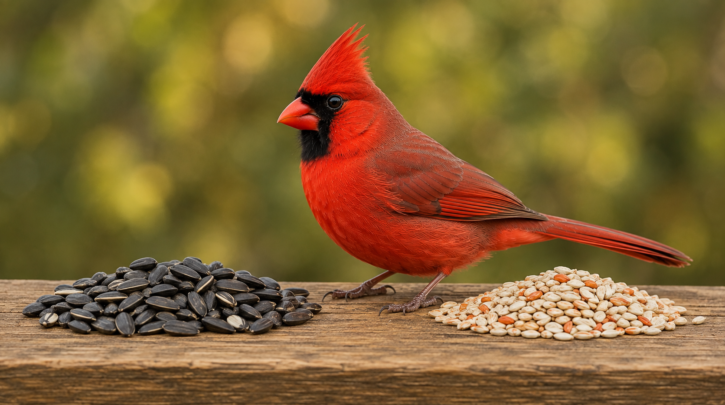

Choosing seed for cardinals is refreshingly simple: two seeds do almost all the work, and most of the mistakes come from buying cheap blends padded with filler. Black oil sunflower and safflower are the cardinal staples, and understanding when to use each — and what to avoid — covers nearly every seed decision.
Black Oil Sunflower: The Foundation
Black oil sunflower is the single best all-purpose cardinal seed: high in the fat and energy cardinals need, with a thin shell their bill opens easily. It’s distinct from striped sunflower seed, which has a thicker, harder shell that’s more work to crack. For a first purchase, a bag of straight black oil sunflower will outperform almost any bargain mixed blend for attracting cardinals.
Safflower: The Squirrel and Bully-Bird Deterrent
Safflower is the strategic choice. Cardinals eat it readily, but its bitter taste deters most gray squirrels as well as aggressive flock birds like grackles, starlings, and house sparrows that can otherwise dominate a feeder. Offering safflower — solo or blended with sunflower — keeps more seed available to cardinals with zero mechanical squirrel-proofing. The one catch is that chipmunks and some other critters don’t mind it, so it’s a deterrent rather than a guarantee.
Sunflower Hearts and Chips
Hulled sunflower — sold as hearts or chips — is sunflower seed with the shell already removed. Cardinals take it happily, and it produces no shell debris under the feeder, which keeps the feeding area cleaner. The tradeoffs are cost (you’re paying more per pound since the shells are gone) and faster spoilage, since hulled seed lacks the protective shell and can turn or clump in wet weather more quickly than whole seed.
Cardinal Blends
Pre-made “cardinal blends” typically combine black oil sunflower and safflower, sometimes with sunflower hearts added, which is a genuinely sensible combination rather than marketing fluff, since it pairs the two seeds cardinals prefer most. Duncraft’s Cardinal Delight is one example built around exactly that sunflower-plus-safflower formula, with no filler seed to sort through. A quality blend saves the trouble of mixing your own, though buying the two seeds separately can be more economical at larger volumes.
See a purpose-built cardinal seed blend View Duncraft Cardinal Delight
What to Avoid
- Red milo — a reddish filler grain cardinals reject; if it’s high on the ingredient list, skip the bag
- Blends heavy on cracked corn and millet — these draw ground-feeding flock birds and squirrels more than cardinals
- Anything with a lot of “waste” — sticks, hulls, and filler mean you’re paying for seed that ends up on the ground
Storage and Freshness
Seed quality drops as it ages, and stale or moldy seed can be rejected by cardinals or, worse, make birds sick. Store seed in a cool, dry, sealed container to protect against moisture and insect infestation, and buy in quantities you’ll use within a couple of months rather than stockpiling more than the birds can get through before it goes stale. Hulled seed in particular should be bought in smaller amounts since it spoils faster.
Matching Seed to Feeder
Whole sunflower and safflower work in nearly any platform or hopper feeder; hulled hearts and chips work anywhere too but especially suit setups where shell debris is a concern, like a window or deck feeder. Whichever seed you choose, it needs a feeder a cardinal can actually use comfortably; see our feeder guide for matching the two.
Buying in Bulk vs. Small Bags
Once you know cardinals are reliably visiting, buying black oil sunflower and safflower in larger bags is considerably more economical per pound than small grocery-store bags. The limit is freshness rather than cost — whole seed keeps for a couple of months in a cool, dry, sealed container, so buying more than the birds will get through in that window risks the seed going stale. Hulled sunflower is the exception, spoiling faster and better bought in smaller quantities.
Seasonal Seed Adjustments
Cardinals’ energy needs rise in cold weather, so the high-fat black oil sunflower becomes even more valuable in fall and winter, sometimes supplemented with suet for extra calories. In spring and summer, when cardinals are also taking insects and fruit, seed demand at the feeder may ease somewhat even though the birds remain present year-round; see our winter guide for cold-season feeding specifics.
The core takeaway stays simple across every season: black oil sunflower as the foundation, safflower to keep squirrels and bully birds in check, and little else genuinely needed.