
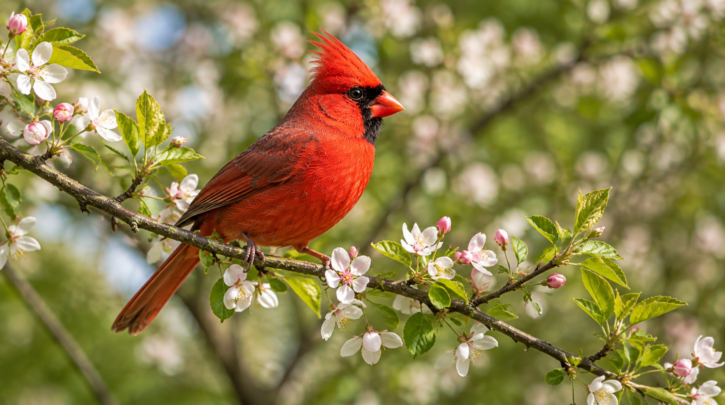

Spring is the season cardinals come alive with activity. The male’s song ramps up as he establishes territory, pairs court and mate-feed, and nesting gets underway. Unlike migratory birds, cardinals are already present when spring arrives — they’ve been in the territory all winter — so spring isn’t about arrivals but about the shift from winter survival into full breeding mode.
Song Reaches Its Peak
The male’s clear, whistled song becomes far more frequent and insistent in spring as he defends breeding territory and signals to his mate. Dawn singing from high, exposed perches is a defining sound of the season, and it’s often the earliest reliable sign that breeding season has begun. Female cardinals sing too, sometimes counter-singing with the male; see our calls and sounds guide for what the different vocalizations mean.
Courtship and Mate-Feeding
Spring courtship includes one of the most charming cardinal behaviors to watch at a feeder: mate-feeding, where the male picks up a seed and delivers it bill-to-bill to the female. This behavior reinforces the pair bond and continues into incubation, and it’s a reliable spring sign that a pair is forming or reaffirming their bond ahead of nesting. Watching for it is one of the pleasures of the season.
Nesting Begins
As spring progresses, the female begins building the first nest of the season, low in dense shrubs or thickets, while the male defends the territory and brings her food. Cardinals often raise two or three broods over the season, so this first spring nest is the start of a long breeding stretch rather than a one-time event; see our nesting guide for site selection and construction details.
Supporting Breeding Cardinals
The most useful things a backyard birder can do in spring are providing dense native cover for nesting and keeping insects available by avoiding pesticides, since nestlings need protein-rich insect food. A steady seed supply still helps the adults, but spring is when the insect side of the diet matters most, so a pesticide-free yard genuinely supports breeding success; see our plant guide for cover and food plantings.
Window Attacks in Spring
Spring is peak season for a quirky cardinal behavior: males attacking their own reflection in windows, car mirrors, and other reflective surfaces, mistaking the reflection for a rival male intruding on their territory. It’s usually harmless but can be exhausting for the bird if it persists. Breaking up the reflection with decals, soap, or a temporary covering on the outside of the glass stops the behavior until breeding-season territoriality settles down.
Spring Weather and Early Nesting Risk
In the southern parts of the cardinal’s range, nesting can begin surprisingly early, sometimes while cold snaps are still possible. An unseasonable late freeze or storm can threaten an early nest, and while there’s little a backyard birder can do about the weather directly, keeping feeders and water reliably available during rough early-spring stretches helps the adults maintain condition through the demands of early breeding. Cardinals are resilient and will re-nest if an early attempt fails, so a lost first nest isn’t the end of the breeding season.
Watching the Pair Bond Form
Spring is the best time to observe the cardinal pair bond in action. Beyond mate-feeding, paired cardinals often move through the territory together, counter-sing, and coordinate their activity in ways that are genuinely engaging to watch at a feeder. For anyone running a camera feeder, spring captures some of the most rewarding footage of the year, documenting courtship behaviors that lead directly into the nesting season.
A Simple Spring Checklist
- Keep feeders stocked with sunflower and safflower as adults fuel up for breeding
- Provide dense native shrubs for nesting cover
- Avoid pesticides so insect food is available for nestlings
- Break up window reflections if a male starts attacking them
- Keep a clean water source available as the weather warms
What Spring Signals for the Year Ahead
Spring sets up the entire cardinal breeding year. A pair that establishes a territory with good cover, reliable food, and clean water in spring is positioned to raise multiple broods through summer, and because cardinals don’t migrate, that same pair will likely remain in the area right through to the following winter. Getting the yard right in spring pays off across all the seasons that follow.
It’s the season that rewards attention most, too — the song, the courtship, and the first nests make spring the liveliest and most engaging stretch of the cardinal year to observe.