
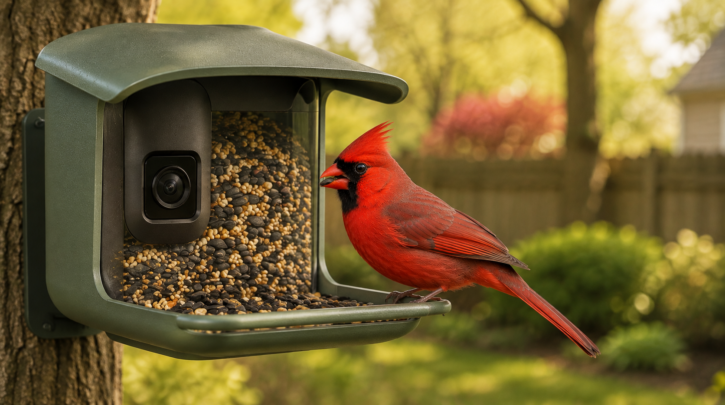

A camera feeder turns a fleeting cardinal visit into a photographed, species-tagged record, and cardinals are one of the most rewarding birds to capture — their vivid red photographs beautifully, and because they’re non-migratory, a camera feeder documents the same pair across an entire year. The category is led by Birdfy and Bird Buddy, and the main decisions are about perch size, image quality, and ongoing subscription cost.
What a Camera Feeder Does
A smart feeder is a normal seed feeder with a built-in camera and motion sensor. When a bird lands, it triggers a photo burst or video clip that uploads to a companion app and runs through bird-specific AI recognition, producing a searchable, species-tagged archive of visits. For cardinals, this is especially useful for documenting pair bonding, courtship feeding, and the summer arrival of dark-billed juveniles — behaviors easy to miss with occasional live watching but captured automatically by a camera that’s always recording.
Choose a Feeder Sized for a Larger Bird
Cardinals are bigger and stockier than the chickadees and finches many smart feeders are designed around, so perch and platform size genuinely matter. Look for a model with a wide, stable perch or an open tray rather than a small clinging perch, so a cardinal can land comfortably and face the camera. A feeder that suits a cardinal’s size will also serve most other backyard birds well, so it is a safe priority to optimize for; see our feeder guide for the perch and platform features cardinals need.
Birdfy Smart Feeders
Birdfy’s smart feeder line pairs AI species recognition with seed feeders in several configurations, including models with wider perching areas and add-ons like solar panels to keep a constantly-recording camera powered. Their recognition is trained across a broad range of species, and the open feeding designs suit cardinals better than a narrow-perch model would. Solar charging is worth prioritizing, since an always-on camera draws meaningfully more power than a passive feeder.
See Birdfy smart feeders that suit larger birds View Birdfy feeders
Bird Buddy
Bird Buddy offers a comparable smart-feeder experience — live notifications, AI recognition, and an app that builds a collection of your visitors — built around a general songbird feeder. It photographs colorful birds like cardinals well, and its app ecosystem is a strength for anyone hosting varied backyard traffic. The choice between it and Birdfy usually comes down to app preference, mounting style, and perch fit rather than a large gap in core capability.
Compare the Bird Buddy smart feeder See Bird Buddy
Storage and Subscriptions
Both brands combine some free cloud storage with paid subscription tiers for extended history, higher-resolution clips, or advanced AI features. These terms change fairly often, so check the current details before buying rather than assuming unlimited free storage — two feeders with identical hardware can differ meaningfully in ongoing cost depending on which service tier you actually need for the history and features you want.
Placement for the Best Cardinal Footage
Cardinals feed most confidently near cover and often at dawn and dusk, which shapes camera placement. Position the feeder near a shrub or hedge so cardinals feel safe approaching, with a clean, uncluttered background behind the perch so the camera isn’t triggered by moving foliage. Morning light tends to produce the best footage, and it happens to coincide with cardinals’ peak early-day activity, making dawn the ideal window for capturing them.
Is It Worth It Over a Basic Feeder?
A camera feeder costs considerably more than a basic hopper or platform feeder, plus any subscription. For casual feeding, a basic feeder is the more practical choice. But for anyone who wants a genuine record of the cardinals using their yard — documenting the same non-migratory pair through nesting, fledging, and winter across a full year — a camera feeder captures something a basic feeder can’t, and cardinals’ striking color and year-round presence make them especially rewarding subjects.
Weatherproofing for Year-Round Use
Because cardinals visit in every season, a camera feeder for them needs genuine weatherproofing rather than just splash resistance — it’s exposed to summer heat, autumn rain, and winter cold with electronics inside that a basic feeder doesn’t have to protect. Check the manufacturer’s operating temperature range if you’re in a climate with real winter cold, since capturing cardinals against snow is one of the most appealing reasons to own one, and that’s exactly when the hardware is most stressed.
Camera Feeders vs. a DSLR Setup
Dedicated bird photographers still get higher image quality from a DSLR or mirrorless camera with a long lens shot from a blind, and that remains the route for gallery-quality cardinal photos. What a smart feeder trades in raw image quality it makes up in consistency and convenience — it runs unattended every day, capturing routine visits and behaviors you’d never sit and wait for, which matters more for everyday identification and record-keeping than for fine-art photography.