
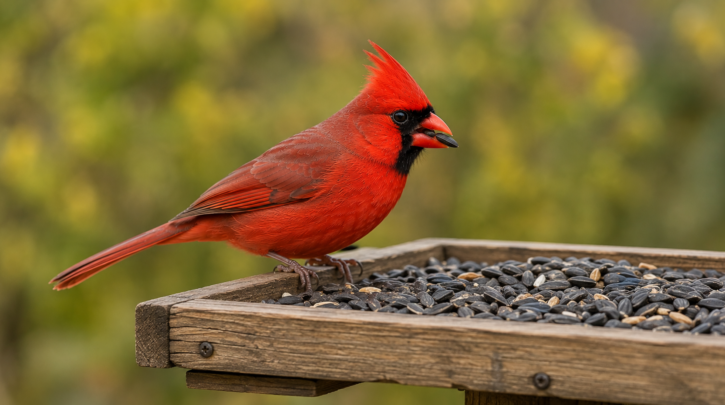

Cardinals are seed specialists with two clear favorites — black oil sunflower and safflower — but their full diet is broader than the feeder suggests, including a significant amount of insects and fruit, especially during breeding season. Getting the food right is most of the work in attracting them, and it comes down to a few high-value seeds offered on the right kind of feeder.
Black Oil Sunflower: The Top Choice
If you offer only one food for cardinals, black oil sunflower seed is the one. Its high oil (fat) content delivers the energy cardinals need, and the relatively thin shell is easy for their strong, conical bill to crack open. It’s also broadly appealing to most other desirable backyard birds, so it does double duty rather than attracting cardinals at the expense of everything else.
Safflower: The Squirrel-Resistant Favorite
Safflower seed is a cardinal favorite with a useful side benefit: its bitter taste is disliked by most gray squirrels and by aggressive “bully” birds like grackles and starlings, while cardinals eat it readily. Offering safflower, either on its own or blended with sunflower, is one of the simplest ways to keep more seed available to cardinals and fewer squirrels on the feeder without resorting to any mechanical squirrel-proofing at all.
Insects and Fruit Round Out the Diet
Cardinals are not strict seed-eaters. In the wild they eat a substantial amount of insects — beetles, caterpillars, crickets, and more — along with wild fruit and berries. Insects become especially important during breeding season, when nestlings need protein-rich food to grow, so a pesticide-free yard that supports a healthy insect population matters more than it might seem; see our plant guide for native species that supply both berries and insect habitat.
What Feeder Foods to Skip
- Red milo — a cheap filler grain in many bargain blends that cardinals and most desirable birds simply toss aside
- Cracked corn as a main food — draws squirrels, blackbirds, and other species you may not want dominating the feeder
- Bread and human food scraps — little nutritional value and can harm birds
- Cheap mixed blends heavy on filler — lots of wasted seed on the ground; a simple sunflower/safflower mix outperforms them
Suet in Cold Weather
Cardinals will take suet, particularly in cold weather when the extra fat helps them maintain body heat through long winter nights. Suet is best offered in fall and winter rather than summer, since it can turn rancid in heat, and it’s a useful supplement to seed during exactly the season when cardinals — being non-migratory — most need reliable high-energy food; see our winter guide for cold-season feeding specifics.
How Cardinals Prefer to Feed
Cardinals are larger and stockier than many feeder birds and prefer a stable, open surface they can perch on while facing their food, rather than clinging to a small perch on a narrow tube feeder. This feeding-style preference is why feeder choice matters as much as seed choice; see our feeder guide for the platform and hopper designs that actually suit their body and behavior.
Ground Feeding
Cardinals are also comfortable feeding on the ground, and often forage for fallen seed beneath a feeder, which is part of why a platform or tray design that catches spillage works so well for them. Scattering a small amount of sunflower or safflower on a clean, dry ground surface near cover can draw cardinals that are hesitant to approach an elevated feeder, particularly birds newer to a yard.
Feeding Times
Cardinals are often among the earliest birds at a feeder in the morning and the last to leave at dusk, a low-light feeding pattern sometimes described as crepuscular. Keeping a feeder stocked overnight so it’s ready at first light catches this early-morning activity, which is one of the best times to watch cardinals since competition from other species tends to be lower and the birds feed more calmly.
Water Matters Too
Food isn’t the only draw — cardinals need reliable water for drinking and bathing year-round, and a clean bird bath near cover can attract cardinals that a feeder alone might miss. This matters especially in winter, when natural water sources freeze and a non-migratory bird still needs to drink; see our bird bath guide for setup and cold-weather options.
Pairing a dependable food source with clean water gives cardinals two of the three things — food, water, and cover — that turn an occasional visitor into a resident that treats the yard as part of its year-round territory.