
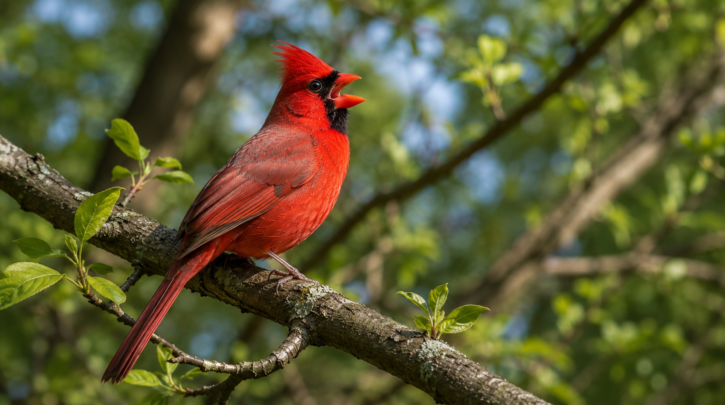

Cardinals are among the most recognizable singers in the backyard, with a clear, whistled song that carries well and a sharp metallic chip note used constantly. Unusually, both males and females sing — a trait that sets cardinals apart from most North American songbirds and makes their sounds worth learning to recognize.
The Whistled Song
The classic cardinal song is a series of clear, loud whistles, often described with phrases like “birdy-birdy-birdy,” “cheer-cheer-cheer,” or “what-cheer, what-cheer.” The notes slur up or down and repeat in phrases, carrying a considerable distance. Cardinals sing year-round to some degree but most intensely from late winter through summer, as males establish and defend breeding territory. The song is loud, musical, and distinctive enough that it often reveals a cardinal’s presence before the bird is seen.
Both Sexes Sing
One of the most notable things about cardinal vocalizations is that the female sings too, which is rare among North American songbirds where singing is typically a male-only behavior. A female cardinal often sings from the nest, and pairs sometimes engage in counter-singing, trading song phrases back and forth. Female song is thought to serve practical functions within the pair bond, sometimes signaling to the male about feeding at the nest, which makes it different in purpose from the male’s territorial song; see our male vs female guide for more on this unusual trait.
The Chip Call
Beyond the song, cardinals make a sharp, short chip or “tik” call note that they use constantly throughout the year. It functions as a contact call between mates, an alarm when a predator is near, and a general keeping-in-touch sound. A rapid series of agitated chip notes usually signals alarm — a cat, hawk, or other threat nearby — while occasional single chips are more routine communication. Learning this call is one of the fastest ways to notice cardinals are around even when they’re hidden in cover.
What the Sounds Mean
- Loud, repeated whistled song — territory defense and mate attraction, most intense in breeding season
- Counter-singing between two birds — often a mated pair communicating, or two males contesting territory
- Single chip notes — routine contact between mates or general presence
- Rapid, agitated chipping — alarm, usually a nearby predator or threat
Why Cardinals Sing So Much
Cardinals are conspicuous singers partly because their edge-and-thicket habitat rewards vocal communication — in dense cover, sound carries information farther and more reliably than visual display. The male’s loud, far-carrying song advertises territory ownership and fitness to rivals and potential mates alike, while the year-round chip calls keep pairs in contact as they move through concealing vegetation where they can’t always see each other.
Recognizing Cardinals by Ear
Because cardinals are loud, sing year-round, and use their distinctive chip call constantly, they’re one of the easier backyard birds to learn by ear. Once the whistled song and sharp chip are familiar, they become a reliable way to detect cardinals in a yard even when the birds are tucked into cover — and a camera feeder with audio can help connect a specific sound to the bird making it, building recognition over time.
Regional Song Variation
Cardinal song varies somewhat by region, with local “dialects” — differences in the exact phrasing and emphasis of the whistled notes that develop within populations. A cardinal in the Southeast may sound subtly different from one in the Midwest, much as regional accents differ among people. Young cardinals learn their songs partly by listening to nearby adults, which is how these local variations get passed down and maintained within an area over generations.
When Cardinals Are Most Vocal
Cardinals sing most intensely from late winter into summer, peaking as males establish breeding territory, but they’re among the birds you’ll hear year-round to some degree, unlike migratory species that fall silent or leave entirely in winter. Dawn is the most active singing period, part of the broader dawn chorus, and the male often sings from a high, exposed perch where his voice carries farthest across the territory he’s defending.
Cardinals in the Dawn Chorus
In spring and early summer, cardinals are often among the first voices in the pre-dawn chorus and among the last singing at dusk, matching their broader low-light activity pattern. A yard that hosts a resident pair will typically hear the male’s whistled song as one of the earliest sounds of the day, a reliable seasonal marker of breeding activity getting underway well before sunrise.