
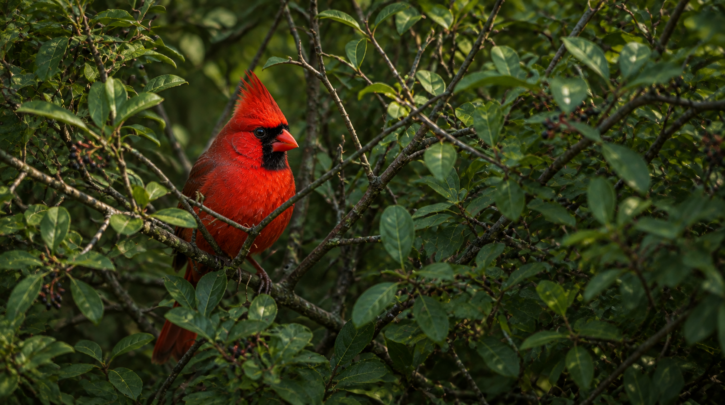

Cardinals face different predators at different life stages — hawks and cats threaten adults, while a wider range of nest predators go after eggs and nestlings. Understanding which threats matter most, and when, is the key to setting up a yard that supports cardinals rather than turning a feeder into an easy hunting ground.
Predators of Adult Cardinals
The most significant threats to adult cardinals are birds of prey — particularly agile woodland hawks like Cooper’s hawks and sharp-shinned hawks that specialize in hunting other birds, sometimes right at feeders — and outdoor cats, which are a major cause of songbird deaths generally. A cardinal’s bright coloring, especially the male’s, may make it slightly more conspicuous to predators, one of the tradeoffs of the vivid plumage that serves the male so well in mate attraction and territory defense.
Outdoor Cats
Domestic and feral cats deserve their own mention because their impact on backyard birds is so large. Cats are ambush hunters that can approach feeders and low cover unseen, and cardinals — which feed on or near the ground and favor low shrubs — are especially exposed. Keeping pet cats indoors, and placing feeders and cover so a cat can’t stalk from close concealment, is one of the most effective things a person can do to protect backyard cardinals.
Nest and Egg Predators
Cardinal nests, placed low in shrubs, are vulnerable to a wide range of predators: snakes, which climb readily into nesting shrubs; squirrels and chipmunks; and other birds, especially blue jays and grackles, which raid nests for eggs and nestlings. Because cardinals nest low and in accessible cover, nest predation is one of the leading causes of nest failure, which is part of why pairs raise multiple broods per season; see our nesting guide for how nest placement tries to manage this risk.
Brood Parasitism by Cowbirds
Brown-headed cowbirds are a different kind of threat — rather than eating cardinal eggs or young, they lay their own eggs in cardinal nests, leaving the cardinals to raise a cowbird chick that often outcompetes their own nestlings for food. Cardinals don’t typically recognize or reject cowbird eggs, so this parasitism can reduce the number of cardinal young a nest successfully produces; see our eggs guide for more on how this plays out.
Window Strikes
Not a predator, but a major cause of cardinal injury and death worth including here: collisions with windows. Reflective glass showing sky or vegetation confuses birds, and cardinals are among the species frequently affected. Male cardinals also sometimes attack their own reflection in windows during breeding season, mistaking it for a rival — usually harmless but exhausting for the bird. Window decals, screens, or breaking up reflections helps with both problems.
Reducing Predator Risk in Your Yard
- Keep pet cats indoors, especially during peak feeding and nesting seasons
- Place feeders near escape cover but not so close that a cat can ambush from it
- Use pole baffles to keep climbing predators and squirrels off feeders
- Break up window reflections with decals or screens to prevent strikes
- Provide dense native shrubs that give cardinals safe, concealed nesting cover
Predation Is Normal — Don’t Overreact
Some level of predation is a natural, unavoidable part of a healthy ecosystem, and cardinals have evolved alongside these threats with strategies — larger clutches, multiple broods, cryptic female plumage, dense nest cover — that account for the losses. The goal for a backyard birder isn’t to eliminate every predator but to avoid making a yard an unnaturally easy hunting ground, particularly when it comes to the outsized, human-introduced impact of outdoor cats and window collisions.
How Cardinals Defend Themselves
Cardinals aren’t defenseless against these threats. Their sharp chip alarm call warns mates and other birds of danger, their attachment to dense cover gives them quick escape routes, and the female’s cryptic brown plumage keeps a sitting nesting bird concealed. Communal winter behavior helps too — more birds at a food source means more eyes watching for hawks. These natural defenses are why cardinal populations remain robust across their range despite a long list of predators at every life stage.
For a backyard birder, working with those natural defenses — providing cover, keeping cats in, reducing window strikes — is far more effective than trying to remove predators, which are a normal part of the ecosystem cardinals thrive within.