
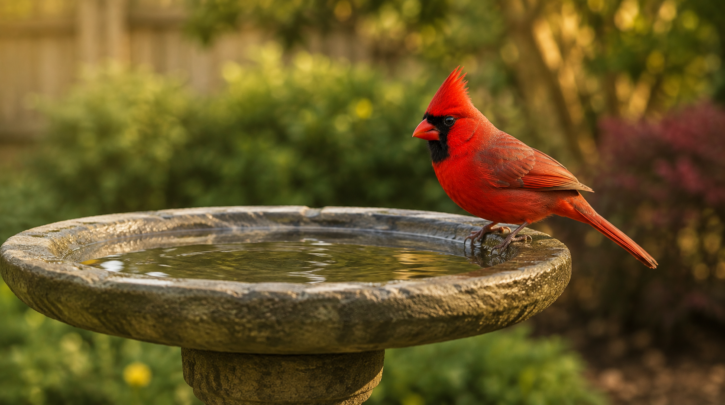

Unlike hummingbirds, cardinals use conventional bird baths readily, both for drinking and bathing, and because they don’t migrate, a reliable water source matters year-round — including through winter, when a heated bath can be one of the most valuable things in the yard. Getting the depth, placement, and cold-weather setup right is most of what makes a bird bath work for cardinals.
The Right Depth
Cardinals, like most backyard birds, prefer shallow water — no more than about two inches deep, and shallower at the edges where they enter. A bath that’s too deep is intimidating and can be unsafe, while a gently sloping basin with a shallow edge lets a cardinal wade in to a comfortable depth. If an existing bath is too deep, adding a few flat stones creates shallow footing and safe standing spots, which also gives smaller birds a place to drink from the edge.
Material and Texture
A bath with a slightly rough or textured surface gives cardinals secure footing, since slick glazed basins can be hard for birds to grip, especially when wet. Concrete, stone, and textured resin baths generally provide better traction than smooth glazed ceramic. Durability matters too — a bath that stays outdoors year-round for a non-migratory bird needs to withstand sun, freezing, and constant use, so a sturdy material that won’t crack in a freeze is worth prioritizing.
Why a Heated Bath Matters in Winter
This is the single most important cardinal-specific bird bath consideration. Because cardinals stay all winter, they need to drink even when natural water sources freeze — and open water is genuinely scarce in freezing weather. A heated bird bath, or a bath with a thermostatically controlled de-icer that only runs when needed, keeps water available through the cold months and can be a major draw for cardinals and other resident birds when little other water exists; see our winter guide for more on cold-season care.
See heated bird baths and de-icers for winter Browse Duncraft heated baths
Ground-Level vs. Pedestal Baths
Cardinals will use both ground-level and pedestal baths, but a pedestal or raised bath placed near cover offers more protection from ground predators like cats, giving birds a better vantage and quicker escape. A ground-level bath more closely mimics natural water sources and can attract a wider range of wildlife, but it’s more exposed. For cardinals specifically, a raised bath near shrubby cover is usually the safer, more-used option.
Placement Near Cover
Like feeders, bird baths draw more cardinals when placed near protective cover the birds can retreat to, but with a small caveat: leave enough open space immediately around the bath that a cat can’t ambush from point-blank concealment. A bath a short flight from a shrub or hedge — close enough for a quick escape, far enough to see a threat coming — strikes the right balance between safety and the cover cardinals want nearby.
Keeping It Clean
Standing water shared by many birds can spread disease, so regular cleaning is essential. Change the water every day or two, scrub the basin to prevent algae and biofilm buildup, and refresh more often in hot weather or heavy use. Clean water isn’t just more attractive — it’s a real health measure, part of the same hygiene discipline covered in our diseases guide for feeders.
Moving Water as an Attractor
The sound and motion of moving water is a strong draw for birds, cardinals included. A dripper, small fountain, or bath with a bubbler adds movement that catches birds’ attention from a distance and helps keep the water fresher than a still basin. Moving water also resists freezing slightly longer in cold weather and discourages mosquito breeding in warm weather, making it a useful upgrade in any season for a year-round resident bird.
A Simple Year-Round Setup
The most effective cardinal bird bath setup is straightforward: a sturdy, shallow, textured basin placed on a pedestal near cover, kept clean with frequent water changes, and equipped with a thermostatic de-icer for winter. Adding gentle water movement is an optional upgrade that increases the draw. This combination covers cardinals’ needs across all four seasons — which matters precisely because, unlike migratory birds, cardinals are present to use it every month of the year.
That year-round presence is the whole reason water infrastructure is worth investing in for cardinals — a bath a migratory bird would only use for part of the year serves a resident cardinal in every season, winter included.