
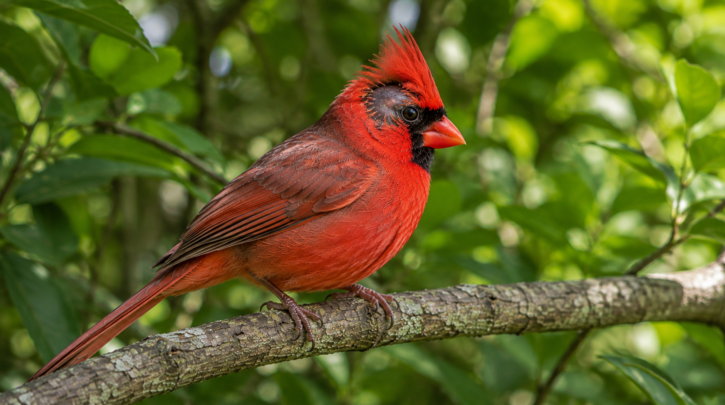

Summer is peak family season for cardinals — multiple broods overlap, fledglings follow their parents around the yard, and by late summer the sometimes-alarming annual molt sets in. It’s the busiest and most visible stretch of the cardinal year, with young birds learning the feeders and the adults working hard to raise successive broods.
Multiple Broods and the Parental Handoff
Cardinal pairs commonly raise two or three broods over the summer. A key behavior to watch for is the handoff: once a brood fledges, the male often takes over feeding the young while the female starts building the next nest and laying again. This is why you’ll see a male cardinal trailed by several begging, dark-billed fledglings in summer; see our baby cardinal guide for how this parenting arrangement works.
Identifying Fledglings
Summer is when young cardinals are most visible, and they can be confusing to identify. Fledglings resemble adult females in their brownish plumage but have a distinctive dark grayish or blackish bill rather than the adult’s orange-red one — the single best way to recognize a juvenile. The bill gradually shifts to adult color over the following months; see our identification guide for the full set of juvenile field marks.
The Late-Summer Molt
Late summer brings one of the more startling cardinal sights: the annual molt, when cardinals replace their feathers. Occasionally a cardinal will molt the feathers on its head all at once, leaving it temporarily bald with bare black skin showing — an alarming look that’s completely normal and temporary. The feathers grow back within a few weeks. This bald-cardinal phenomenon is a normal part of the molt cycle, not a sign of disease or mites, though it understandably startles people seeing it for the first time.
Higher Feeder Traffic
Summer often brings the year’s busiest feeder activity, as adults feed themselves and their young and fledglings learn to use the feeders. Keeping feeders well stocked and clean matters especially now, both because demand is high and because warm weather accelerates spoilage and disease risk at busy feeders; see our diseases guide for warm-weather hygiene.
Insects Still Matter
Even as seed feeding continues, insects remain a critical part of the summer diet, especially for feeding the season’s nestlings and fledglings. A pesticide-free yard that supports a healthy insect population directly helps cardinals raise their young through the peak breeding months, making it one of the more meaningful summer contributions a backyard birder can make.
A Simple Summer Checklist
- Keep feeders stocked and clean through the busiest feeding season
- Watch for dark-billed fledglings and the male-led feeding handoff
- Don’t be alarmed by a temporarily bald molting cardinal
- Maintain clean water through the heat
- Skip pesticides so insect food stays available for young birds
Why Summer Cardinals Sometimes Seem Scarce
Some people notice cardinals seem less visible at feeders in parts of summer, which can be puzzling for a bird that doesn’t migrate. The usual explanation is that abundant natural food — insects and ripening fruit — plus the demands of nesting and staying near cover with young simply keep cardinals busier away from feeders. They haven’t gone anywhere; they’re just spread across a richer summer landscape. Feeder visits typically pick back up as natural food declines heading into fall.
Water in the Heat
Hot summer weather makes a reliable water source especially valuable, both for drinking and for bathing to keep feathers in good condition during molt. A clean, shallow bird bath — refreshed frequently in the heat to prevent algae and mosquito breeding — is a strong summer draw; see our bird bath guide for warm-weather setup.
Between the busy families, the confusing fledglings, and the startling molt, summer is the most eventful stretch of the cardinal year — and the season where simply keeping food, water, and cover reliable does the most good.
Preparing for the Shift Toward Fall
As summer winds down, cardinal activity gradually shifts. The last broods fledge, the molt runs its course, and natural food begins to decline, all of which nudges cardinals back toward heavier feeder use heading into fall. Keeping the feeding station consistent through this transition helps cardinals move smoothly from the abundance of summer into the leaner months ahead, when a reliable feeder becomes increasingly important; see our fall guide for what comes next.