
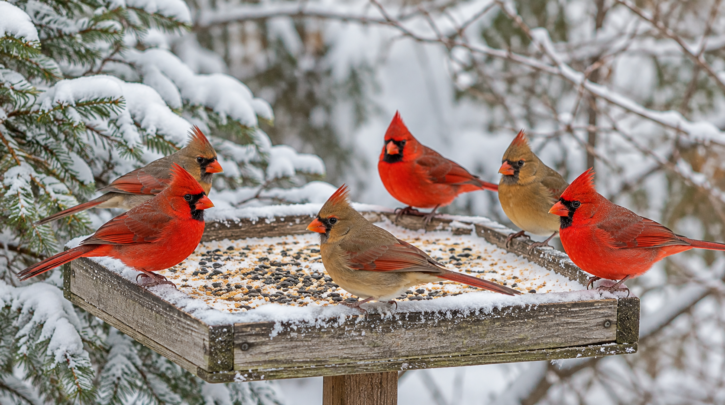

Winter is the season that matters most for cardinals and the people who feed them. Because cardinals don’t migrate, they face the full harshness of winter in place, and reliable food and unfrozen water can genuinely help them survive. It’s also the season cardinals are most striking — a brilliant red male against snow is one of the defining images of North American winter.
How Cardinals Survive the Cold
Cardinals endure winter through a combination of strategies: fluffing their feathers to trap insulating air, shivering to generate body heat, seeking dense evergreen and shrub cover to escape wind, and consuming enough high-energy food to fuel the metabolism that keeps them warm. Roosting in thick cover overnight and gathering at good food sources by day, they’ve adapted well enough to expand their range steadily northward over the past century.
The Most Important Feeding Season
Winter is when feeder food does cardinals the most good. Natural food is scarce, days are short, and the energy cost of staying warm is high, so a reliable feeder can be a meaningful help. High-fat black oil sunflower is the top winter food, and suet — best offered in cold weather when it won’t turn rancid — provides concentrated calories that help cardinals get through long, cold nights; see our feeding guide for the full cold-season diet.
Why Unfrozen Water Is Critical
This is the single most overlooked part of winter cardinal care. Cardinals need to drink even in freezing weather, and open water is genuinely scarce when everything freezes. A heated bird bath or a thermostatic de-icer that keeps water available through the cold can be one of the biggest draws in the winter yard, sometimes attracting cardinals and other resident birds even more than food does; see our bird bath guide for heated options.
See heated bird baths for winter Browse Duncraft heated baths
Winter Flocking
Winter brings a notable shift in cardinal social behavior. The intense territoriality of breeding season fades, and cardinals gather in loose groups — sometimes a dozen or more — at productive food sources, tolerating each other in a way they wouldn’t in spring. A yard with good winter food and cover can host several cardinals at once, one of the rewards of winter feeding, before the flocks break up again as breeding season approaches.
Cover for Roosting and Shelter
Dense cover is as important as food in winter. Cardinals roost overnight in thick evergreens, shrubs, and vine tangles that shelter them from wind and cold and hide them from predators. A yard with good evergreen and shrub cover gives wintering cardinals somewhere to shelter between feeder visits, which matters as much for winter survival as the food itself, especially through the coldest nights.
The Winter Cardinal’s Appeal
There’s a reason the cardinal became a fixture of winter and holiday imagery: because it doesn’t migrate, its brilliant red is one of the few bright colors in a gray, snow-covered winter landscape. A well-stocked winter feeding station near cover can bring these striking birds close throughout the season, turning the hardest months into some of the best cardinal-watching of the year.
Timing Feeder Visits in Cold Weather
Cardinals are often the first birds at a feeder at dawn and the last at dusk, a low-light feeding pattern that’s especially pronounced in winter, when they need to fuel up first thing after a long cold night and top off again before roosting. Making sure the feeder is stocked and accessible at first light catches this critical early-morning visit, when a cardinal most needs to replenish the energy reserves burned overnight keeping warm. It’s also the best time to see them, arriving before most other birds are active.
A Simple Winter Checklist
- Keep feeders reliably stocked with high-fat black oil sunflower and suet
- Provide unfrozen water with a heated bath or de-icer
- Maintain dense evergreen and shrub cover for roosting and shelter
- Clean feeders regularly even in cold weather to prevent disease
- Expect and enjoy loose winter flocks at good food sources
Winter Is Where Cardinal Feeding Matters Most
More than any other season, winter is when a backyard birder’s effort genuinely helps cardinals. A migratory bird simply leaves when conditions turn harsh, but a cardinal stays and faces the cold, which means reliable food, unfrozen water, and good cover through winter directly support birds working hard to survive. It’s also the most rewarding season to feed them, bringing their brilliant red close during the grayest months and closing out a year-round cycle that, for a non-migratory bird, never really pauses.