
 Written by: Justin Roberts
Posted on: July 3, 2026
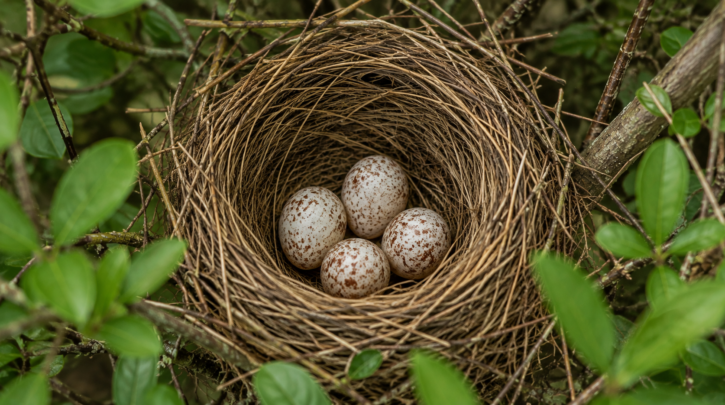
Cardinal Eggs: Appearance, Clutch Size, and Incubation
Cardinal eggs are pale grayish or greenish-white with brown and gray speckling, laid in clutches of usually three to four, and incubated mainly by the female for around 11 to 13 days. Compared to the two-egg clutches of some birds, cardinals invest in larger clutches…
 Written by: Justin Roberts
Posted on: July 3, 2026
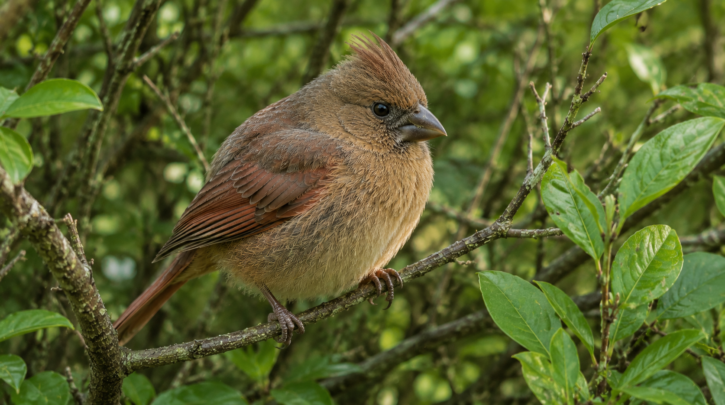
Baby Cardinals: Nestlings, Fledglings, and Care
Baby cardinals hatch blind and nearly naked and develop fast — leaving the nest in as little as 9 to 11 days, well before they can fly strongly. Both parents feed them, and the male often takes over care of the fledglings while the female…
 Written by: Justin Roberts
Posted on: July 3, 2026
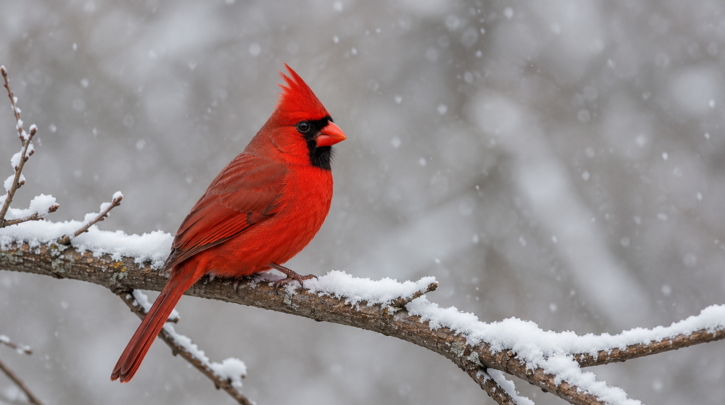
Do Cardinals Migrate? Why They Stay All Year
Northern Cardinals do not migrate. They’re year-round residents throughout their entire range, staying put through winter even in the cold northern reaches they’ve expanded into over the past century. This non-migratory lifestyle shapes almost everything about how cardinals live — and it’s a big part…
 Written by: Justin Roberts
Posted on: July 3, 2026
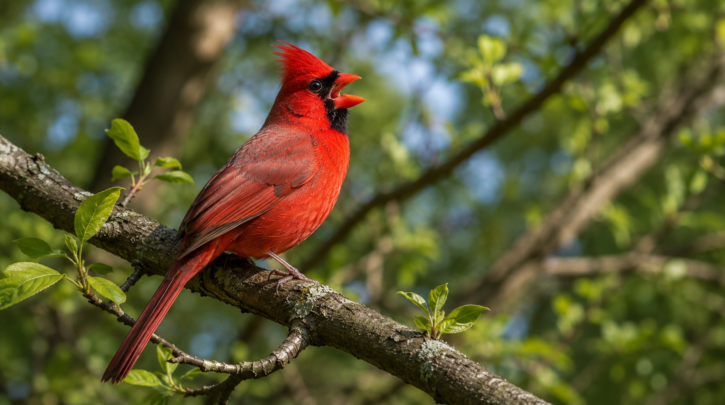
Cardinal Calls and Sounds: Songs, Chips, and What They Mean
Cardinals are among the most recognizable singers in the backyard, with a clear, whistled song that carries well and a sharp metallic chip note used constantly. Unusually, both males and females sing — a trait that sets cardinals apart from most North American songbirds and…
 Written by: Justin Roberts
Posted on: July 3, 2026
Cardinal Predators: Threats to Adults, Nests, and Young
Cardinals face different predators at different life stages — hawks and cats threaten adults, while a wider range of nest predators go after eggs and nestlings. Understanding which threats matter most, and when, is the key to setting up a yard that supports cardinals rather…
Written by: Justin Roberts
Posted on: July 3, 2026
Cardinal FAQ: Common Questions Answered
A running list of the questions people ask most about Northern Cardinals, answered directly and linked out to the fuller guides where a topic deserves more depth than a short answer can give. This site participates in affiliate programs. If you buy through a link…
 Written by: Justin Roberts
Posted on: July 3, 2026
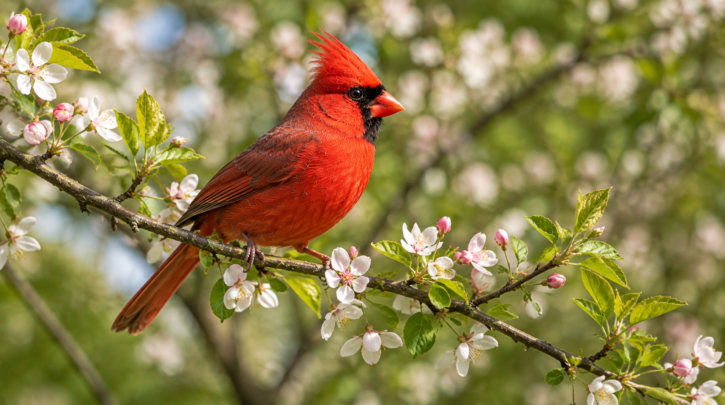
Spring Cardinal Guide: Song, Courtship, and Nesting Season
Spring is the season cardinals come alive with activity. The male’s song ramps up as he establishes territory, pairs court and mate-feed, and nesting gets underway. Unlike migratory birds, cardinals are already present when spring arrives — they’ve been in the territory all winter —…
 Written by: Justin Roberts
Posted on: July 3, 2026
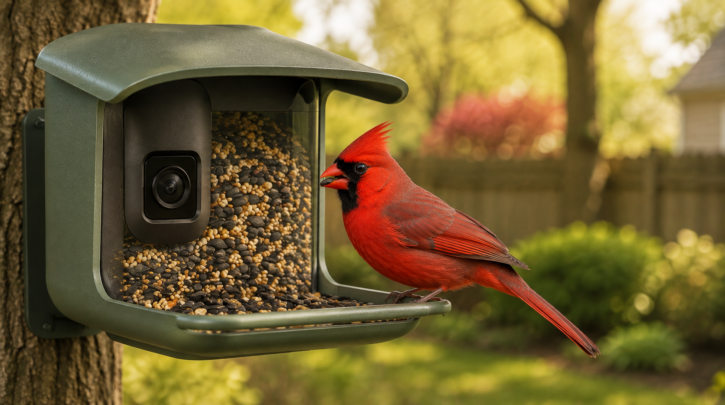
Best Cardinal Camera: Smart Bird Feeders Compared
A camera feeder turns a fleeting cardinal visit into a photographed, species-tagged record, and cardinals are one of the most rewarding birds to capture — their vivid red photographs beautifully, and because they’re non-migratory, a camera feeder documents the same pair across an entire year….
 Written by: Justin Roberts
Posted on: July 3, 2026
You Can Already Spot a Cardinal From Across the Yard — So Why Buy Binoculars?
A male cardinal doesn’t leave much room for doubt. Solid red, a crest, a black mask around a thick orange bill — you can make that call from the far side of the yard, through a window, past a dirty windshield. It’s often the very…
 Written by: Justin Roberts
Posted on: July 3, 2026
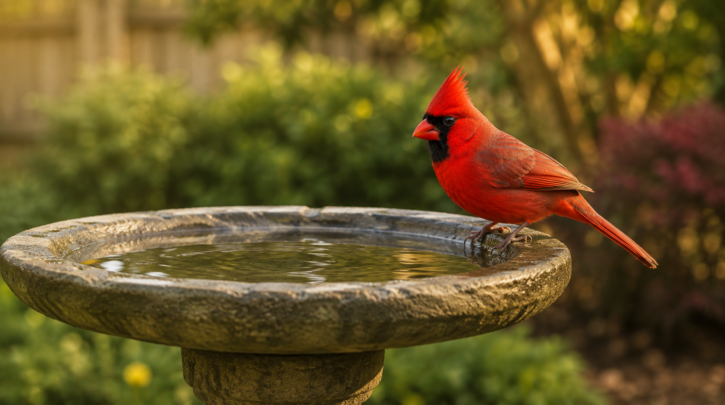
Best Bird Bath for Cardinals: Basins, Heaters, and Placement
Unlike hummingbirds, cardinals use conventional bird baths readily, both for drinking and bathing, and because they don’t migrate, a reliable water source matters year-round — including through winter, when a heated bath can be one of the most valuable things in the yard. Getting the…